Dialing in your wave: ballast, speed, and trim
The actual checklist for getting a clean, surf-able wave behind your boat — including the small adjustments most riders miss.
Published April 24, 2026
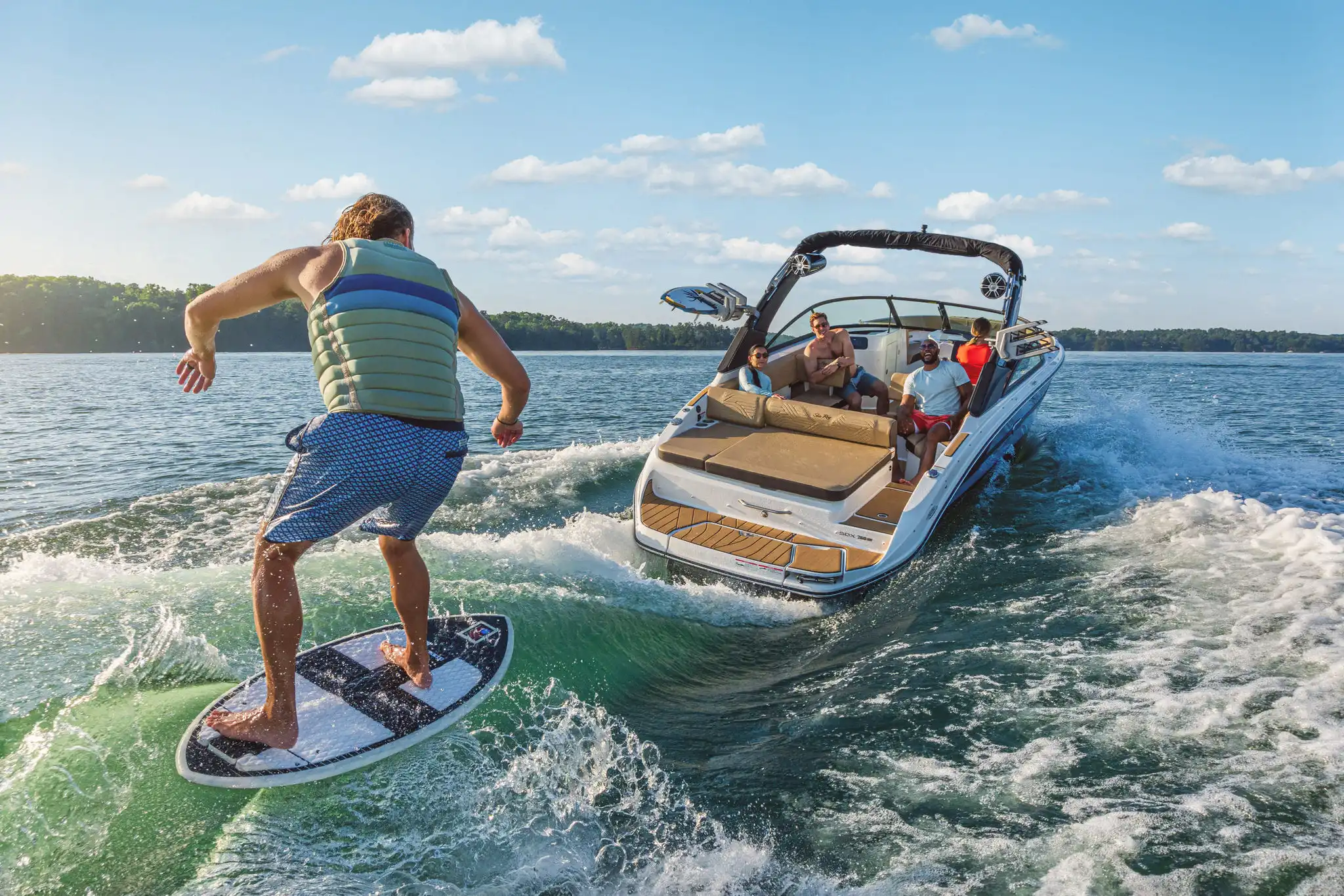
A great wave has a clean face, a fat green pocket, a defined lip, and enough length down the line that the rider can actually surf. A bad wave is a washy hump that throws everyone off. The difference is rarely the boat — it’s the setup. Here’s the dial-in checklist we run before every session.
1. Lean the boat
Wake boats need to lean toward the surf side. List the boat 8-12° in the direction the rider will surf. You get list from ballast — heavier on the surf side, lighter on the dry side. If your boat has integrated ballast (ProBallast, Auto-list, etc.), engage the surf preset. If not, use aftermarket bags.
Rule of thumb for fill ratio:
- Surf-side rear locker: full
- Surf-side front locker: half to three-quarters
- Dry-side rear locker: empty or quarter
- Center / bow: tune for trim (see step 3)
2. Speed first
Most boat-and-wave problems are actually speed problems. Wakesurf speed lives in a tight band — usually 10.0 to 11.8 mph for most v-drives. Too slow and the wave rolls; too fast and the wave blows out into a chop.
Start at 10.5, lock the GPS speed control if you’ve got it, and let the rider tell you if they want it faster or slower in 0.2 mph increments. If your boat doesn’t have GPS speed control, retrofit one — it’s the single biggest upgrade you can make to your wave.
3. Trim the bow
If your wave looks short and steep, the bow is too high — drop the wake plate or move ballast forward. If it looks long but washy, the bow is too low — bring ballast back or raise the plate.
This is where most owners stop tuning, and it’s where the biggest gains live. Trim the bow until the wave has a defined, clean lip with no spray off the top.
4. Surf tab / Surf Gate / NSS / wave plate
If your boat has a surf-side wave-shaping tab (Surf Gate, NSS, Surf Star, etc.), engage it on the surf side at 80-100% to start. These tabs work by deflecting water — you’ll feel the wave become more defined and the pocket get fatter.
A common mistake: leaving the off-side tab partially open. The off-side tab should usually be closed or barely cracked.
5. Rope length
The rope length controls where the rider sits in the wave. Too long and they’re in washy water with no pocket; too short and they’re hugging the swim platform with no down-the-line room. Aim for the rider to be just outside the spray zone, in the green pocket. Adjustable surf ropes have 2-foot increments — start in the middle and tune.
6. Driver inputs
Subtle wheel inputs only. The wave wants the boat tracking dead straight. If the wave looks great when the boat is straight and washy when it’s turning, the boat is wandering. Cruise control helps, but quiet hands matter more.
A two-minute setup checklist
- Engage surf-side ballast.
- Set GPS speed to 10.5 mph.
- Engage surf-side tab (full open).
- Trim bow until lip is defined and clean.
- Place rider just outside the spray zone.
- Adjust speed in 0.2 mph increments based on rider feedback.
Once you’ve found your “house numbers,” write them on a sticker by the helm. Every boat has its own sweet spot, and once you find it you don’t want to relearn it every weekend.
Wave looks great, rider still falling?
Wave shape isn’t the only variable. Check the board — beginners on a skim board will fall regardless of wave quality. Read the beginner’s guide for the rider-side fundamentals.